Retaining Walls Block in Montgomery Village: A Homeowner's Guide
Learn how retaining wall block can solve slope and erosion problems for homeowners in Montgomery Village and nearby communities.
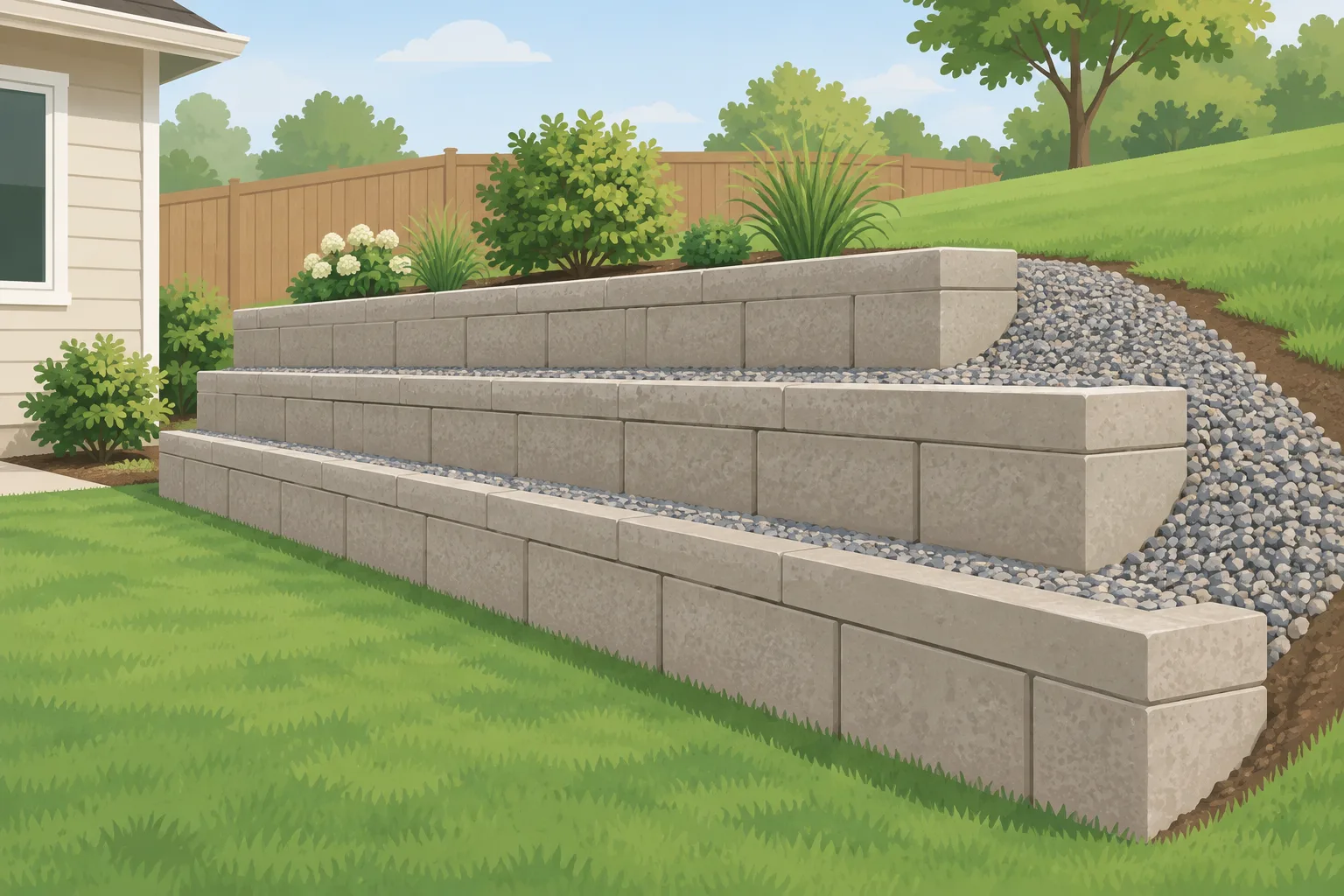
Retaining wall block is one of the most practical solutions for yards with slopes, erosion, or uneven ground in Montgomery Village and the surrounding area. Stacked block walls hold back soil, create flat usable space, and add clean structure to a yard. With the right block and proper installation, a retaining wall can last for decades with little upkeep.
Why Montgomery Village Yards Often Need Retaining Walls
Many homes in Montgomery Village, Gaithersburg, and North Potomac sit on lots with natural grade changes. The rolling terrain in this part of Montgomery County means many backyards slope toward the house or toward a neighbor's property. Without a wall, rainwater carries soil downhill, erodes planting beds, and can push water toward foundations. Block retaining walls stop that movement and give homeowners flat, functional outdoor space.
What Retaining Wall Block Is and How It Works
Retaining wall block is a manufactured concrete unit designed to stack and interlock. Each block is heavier and more precise than a standard concrete block. The units fit together without mortar in most residential applications. The wall leans slightly into the slope, which helps it resist the pressure of the soil behind it. A gravel backfill layer and a perforated drain pipe behind the wall allow water to move through instead of building up pressure against the blocks.
- Gravity walls use the weight of the block itself to hold soil back. These work well for walls under four feet tall.
- Geogrid-reinforced walls use layers of mesh buried in the soil behind the wall. This is common for walls taller than three to four feet.
- Tiered walls break a tall slope into two or more shorter walls with a planting bed or flat step between them.
Choosing the Right Block for Your Yard
Block comes in many sizes, textures, and colors. Homeowners in Rockville, Potomac, and North Bethesda often choose a tumbled or split-face finish to match the natural look of their landscaping. Larger block units are heavier and more stable for taller walls. Smaller, decorative block works well for garden borders and low walls under two feet. Consider the color of your home, your existing hardscape, and how much weight the wall needs to hold. A concrete professional can help you match block style to your specific yard and soil conditions.
Key Steps in a Proper Block Retaining Wall Installation
A retaining wall that fails usually fails because of a weak base or poor drainage. Here is what a proper installation looks like from start to finish.
- Mark utility lines. Before any digging starts, call 811 to have underground lines marked. This is required by law and protects your property.
- Excavate and level the base. The first course of block sits below grade on a compacted gravel base. This is the most important step.
- Set the first course carefully. Every block that follows depends on this row being level and straight.
- Backfill with gravel. Crushed stone goes directly behind the wall. It drains fast and does not expand when wet the way clay soil does.
- Install drainage pipe. A perforated pipe at the base of the gravel layer carries water away from the wall.
- Step back each course. Each row of block sets back slightly from the one below it. This batter keeps the wall stable.
- Cap the wall. A cap block or adhesive-set top course finishes the look and keeps water from entering the top of the wall.
How Retaining Walls Connect to Other Concrete Work
Many homeowners in Germantown, Clarksburg, and Darnestown combine a retaining wall project with other improvements at the same time. A new wall often opens up space for a patio or walkway on the newly leveled ground. Our team handles Patios and Walkways and Retaining Walls together so the finished surfaces line up correctly and drain properly. Combining work in one project also reduces the cost and disruption of a second mobilization.
Questions Homeowners Ask
How tall can a block retaining wall be without a permit in Montgomery County?
Montgomery County generally requires a permit for retaining walls over four feet in height measured from the bottom of the footing. Always check with the county before starting any wall project, because rules can change and lot-specific conditions may apply.
How long does a block retaining wall last?
A properly built block wall with good drainage can last 30 years or more. The biggest threats to wall life are poor drainage behind the wall and a weak or uncompacted base. Both are preventable with correct installation.
Can I build a block retaining wall myself?
Short garden walls under two feet are sometimes manageable for experienced homeowners. Walls taller than two feet involve significant soil pressure, drainage planning, and heavy materials. Errors on taller walls can cause failure that damages your yard, your home, or a neighbor's property.
Do retaining walls add value to a home?
A well-built retaining wall creates usable outdoor space and prevents erosion damage, both of which are attractive to buyers in areas like Garrett Park and North Kensington where sloped lots are common. The value comes primarily from solving a real problem on the property.
If you own a home in Montgomery Village or a nearby community and your yard has a slope, erosion, or soil movement problem, contact Avalos Landscape Construction LLC today for a free quote. Our team serves homeowners across the area and can help you plan the right retaining wall solution for your property. Request your free quote now.
Get Your Free Quote
Licensed, insured, and ready to help. Let's get it done right.